Escalating tensions in the Middle East are once again creating uncertainty across global energy markets. Following renewed military action involving the United States and Iran, alongside growing concerns over the security of shipping through the Strait of Hormuz, oil prices have risen as markets assess the risk of future supply disruption.
Although global oil and gas supplies have continued to flow, wholesale energy markets are reacting to the increased geopolitical risk. As recent weeks have shown, the possibility of disruption is often enough to move prices significantly, even before supplies are affected.
Why Are Markets Reacting?
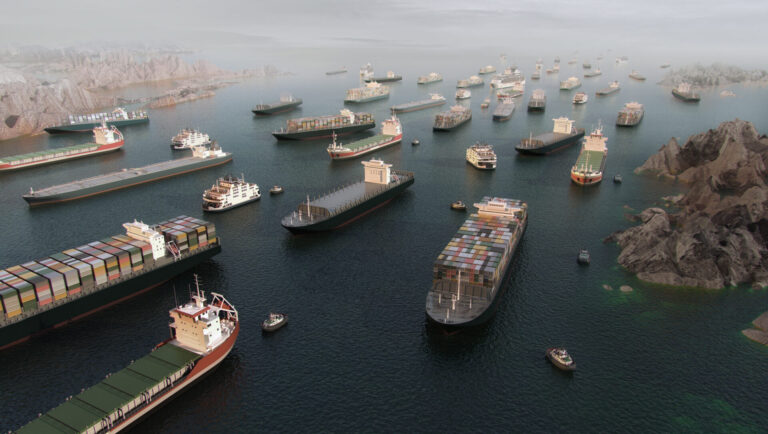
The Strait of Hormuz remains one of the world’s most strategically important energy routes. Around one fifth of the world’s oil consumption and a significant proportion of global liquefied natural gas (LNG) exports pass through the narrow shipping lane every day, making it vital to international energy trade. Any disruption, or even the possibility of one, can quickly affect global commodity markets.
Recent military action involving the United States and Iran has increased concerns that the conflict could affect commercial shipping in the region. While vessels continue to pass through the Strait of Hormuz, shipping companies, insurers and energy traders are all factoring greater risk into their decisions.
Adding to the uncertainty, President Donald Trump recently proposed introducing a 20% fee on cargo passing through the Strait of Hormuz, arguing that the United States was bearing much of the cost of protecting the route. Although the proposal was later withdrawn, it highlighted how quickly political developments can influence global energy markets.
Why Have Oil Prices Increased?
Energy markets are driven as much by expectations as by physical supply. While oil production has not fallen significantly, traders are pricing in the possibility of shipping delays, higher transport costs and further military escalation. Even the perception that supplies could become more difficult to move is often enough to increase oil prices.
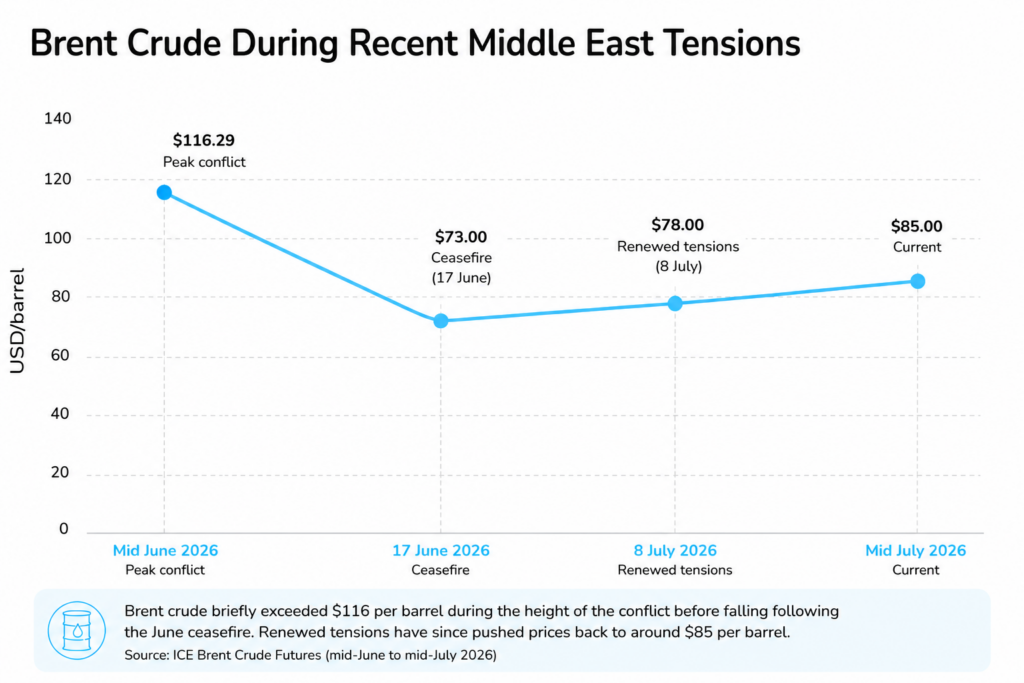
The movement in Brent crude over recent months highlights just how quickly geopolitical events can influence global markets. During the height of the conflict earlier this year, Brent crude briefly reached $116.29 per barrel as fears grew that shipping through the Strait of Hormuz could be severely disrupted.
A ceasefire agreed on 17 June brought some stability to markets, with Brent falling to around $73 per barrel over the following weeks as concerns over supply eased. However, after the ceasefire collapsed on 8 July following renewed attacks on shipping, prices began climbing again. Brent crude is now trading at around $85 per barrel, as markets continue to price in the risk of further disruption.
Although prices remain well below the peak seen earlier in the conflict, they are still around $12 per barrel higher than they were at the beginning of July. This demonstrates how sensitive wholesale energy markets remain to developments in the Middle East, even when there has been no significant interruption to physical oil supplies.
What Could This Mean for Energy Prices?
Qatar, one of the world’s largest LNG exporters, transports much of its gas through the Strait of Hormuz. If conflict were to disrupt LNG exports or increase shipping costs, wholesale gas prices could also rise. As gas-fired power stations continue to play an important role in UK electricity generation, higher wholesale gas prices can also feed through into electricity prices.
Shipping costs are also under pressure. Higher insurance premiums and increased freight costs for vessels travelling through the region can raise the cost of transporting goods worldwide, adding further pressure to supply chains and operating costs.
While retail energy prices do not respond immediately to movements in wholesale markets, sustained increases in oil and gas prices can influence future business energy contracts as suppliers adjust pricing to reflect changing market conditions.
Manufacturers, logistics businesses, transport operators and other energy-intensive organisations may be particularly exposed if wholesale prices remain elevated. Businesses approaching contract renewal may also find suppliers reviewing prices more frequently as markets continue to respond to geopolitical developments.
It remains difficult to predict how the conflict will develop or whether it will lead to more significant disruption to global energy supplies. However, the events of recent weeks demonstrate how quickly geopolitical tensions can affect wholesale energy markets, even when supply chains continue to operate.
Organisations with significant energy consumption may wish to review their procurement strategy and contract timelines to ensure they are well positioned should volatility continue in the months ahead.