Mon-Fri 9am - 5pm

BP Consulting

Home » Blog » Energy Insights » British Industrial Competitiveness Scheme (BICS) Guidance

British Industrial Competitiveness Scheme (BICS) Guidance

Our Services

Energy
Management
The application deadline for the British Industrial Competitiveness Scheme (BICS) is approaching, with manufacturers having until 30 November 2026 to submit their applications.
The scheme aims to support eligible manufacturing businesses by reducing electricity costs, helping to ease the financial pressures associated with high industrial energy costs.

Why Has BICS Been Introduced?
Electricity costs remain a significant challenge for UK manufacturers, particularly those operating energy-intensive processes or competing with businesses in countries where industrial energy prices are lower.
One of the main contributors to these costs is the non-commodity portion of electricity bills. Unlike wholesale electricity prices, non-commodity costs cover additional charges associated with supplying electricity, maintaining infrastructure and supporting government energy policies.
These charges have increased over recent years, influenced by factors such as electricity network investment, renewable energy support schemes and other industry obligations.
For manufacturers, this can create additional financial pressure, affecting operating costs, profitability and their ability to compete internationally. The government estimates that more than 10,000 manufacturing businesses could benefit from the scheme.
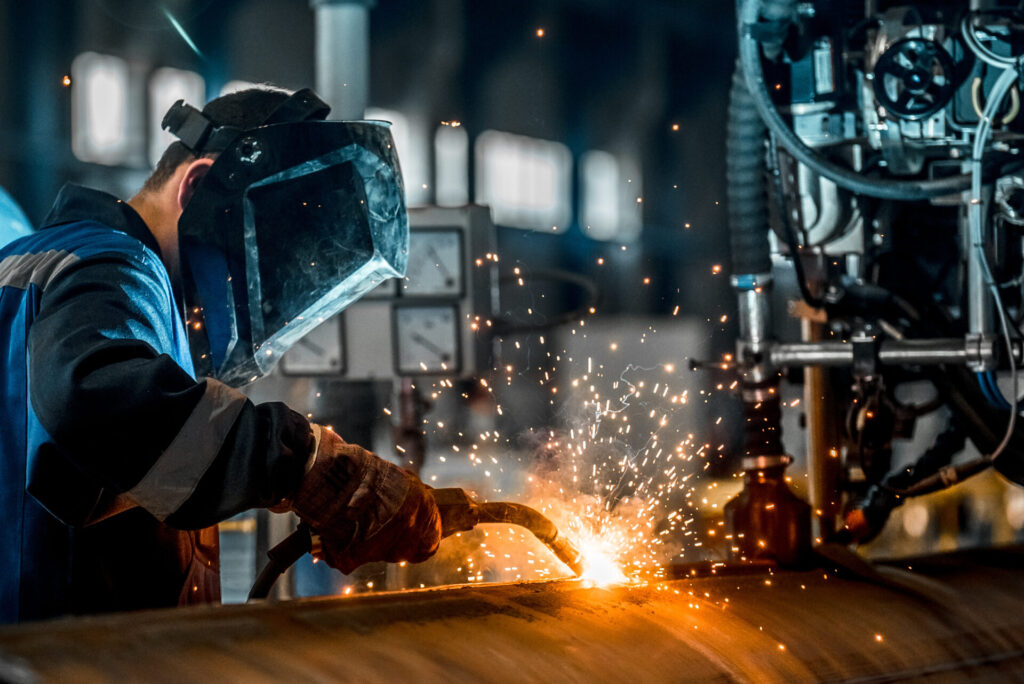
man welding at manufacturing plant representing BICS

What Is The Eligibility Criteria?

BICS is designed to support manufacturers operating in sectors considered important to the UK’s economic growth and industrial supply chains. These include manufacturing activities within the government’s priority growth sectors, alongside foundational industries that supply essential materials and components.
Examples of potentially eligible industries include automotive manufacturing, aerospace, defence, clean energy technologies, chemicals, metals and advanced materials. However, operating within one of these industries does not automatically mean a business will qualify.
To be eligible, businesses must meet four main requirements:
  • Companies House registration:

    The business must be registered with Companies House.

  • Qualifying SIC code

    The business must operate within an eligible manufacturing sector, identified through its Standard Industrial Classification (SIC) code.

  • Qualifying HS code

    The business must manufacture products included within the scheme’s eligible Harmonised System (HS) codes.

  • Minimum electricity consumption

    The scheme generally requires eligible manufacturing sites to consume at least 33 MWh of grid-supplied electricity annually.

Importantly, eligibility is assessed on a site-by-site basis. This means that businesses operating multiple manufacturing facilities may find that some sites qualify while others do not.
Where a site carries out both eligible and ineligible manufacturing activities, partial exemptions may also be available, depending on how electricity consumption is allocated.

How Much Could Manufacturers Save Through BICS?

Eligible manufacturers could receive electricity cost reductions of up to £40/MWh, depending on their electricity consumption, qualifying activities and applicable charges.
Rather than providing a direct discount on wholesale electricity prices, BICS removes certain non-commodity costs from eligible electricity supplies.

The scheme provides exemptions from three charges:

1. Renewables Obligation (RO): A scheme that supports the generation of electricity from renewable sources.

2. Feed-in Tariffs (FiT): Charges associated with supporting smaller-scale renewable electricity generation.

3. Capacity Market (CM): A mechanism designed to help ensure sufficient electricity generation capacity is available to meet demand.

By removing these charges, BICS aims to reduce operating costs for qualifying manufacturers, potentially freeing up funds for investment, business development and energy efficiency improvements.
The £40/MWh figure represents a potential saving rather than a guaranteed reduction. The actual financial benefit will vary between businesses and manufacturing sites.

When Will BICS Electricity Relief Begin?
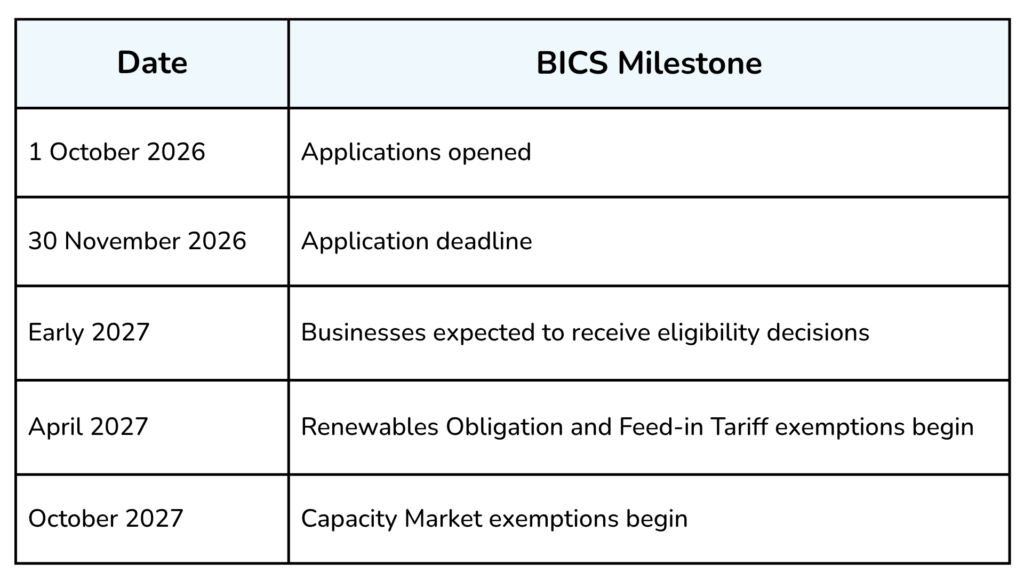
Although the application process is already open, the main exemptions will be introduced gradually throughout 2027. The government has confirmed the following timetable:
The government has also outlined plans for additional payments in 2027 relating to the period beginning in April 2026. Further details regarding how these payments will be calculated and delivered are expected to be confirmed.

Apply Now Before The Window Closes

The first application window closes at 11:59pm on 30 November 2026.Manufacturers considering applying can use the government’s official BICS eligibility checker⁠ to assess whether their business may qualify for the scheme.
Businesses that meet the eligibility requirements can then submit their application⁠ through the government’s online application service. We recommend reviewing the requirements and gathering the necessary supporting evidence ahead of the deadline, particularly for businesses operating across multiple sites.
At BP Consulting, we’re here to support businesses with their wider energy requirements, from procurement and energy management to developing effective energy strategies.
Whether you need guidance on BICS, assistance reviewing your current electricity arrangements or advice on managing your energy costs, our team is here to help.

Get in touch to discuss your business’s energy requirements and explore your options.
Facebook
LinkedIn
Discover More