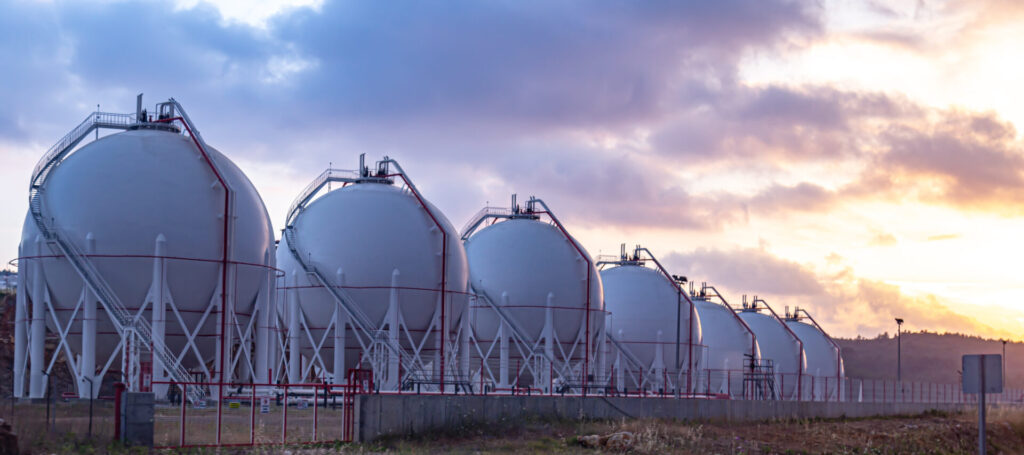
Could Europe run out of gas? Concerns are growing again as the continent approaches another winter with unusually low storage levels, tighter global supplies and increasing exposure to international liquefied natural gas markets. While Europe is not currently facing an immediate gas shortage, the position heading into winter 2026 is considerably tighter than in recent years.
EU gas storage was below 60% full in early August, around 12 percentage points lower than at the same point last year and the lowest level for this time of year since records began in 2011. Oxford Economics has described the coming winter as potentially the EU’s most challenging for energy supplies since the 2021-22 crisis.
Why Are Europe’s Gas Stocks So Low?
Europe’s gas market has changed significantly since the energy crisis of 2022. Before Russia’s invasion of Ukraine, the EU consumed approximately 400 billion cubic metres of gas annually, with Russia supplying a substantial proportion through pipelines. European consumption has since fallen to around 330 bcm, while Russian pipeline supplies have been dramatically reduced.
Europe has consequently become increasingly dependent on LNG (liquefied natural gas) from suppliers including the US and Middle East, alongside pipeline gas from Norway.
This has created a different type of supply risk. Pipeline gas provides relatively continuous flows, whereas LNG arrives by ship and can be redirected towards markets offering higher prices.
European buyers are therefore competing directly with countries across Asia and elsewhere for available cargoes. Changes in global temperatures, demand or geopolitical conditions can quickly influence where those supplies are delivered.
The situation has been intensified by disruption around the Strait of Hormuz, through which around 20% of global LNG flows normally pass. The resulting pressure on international LNG availability has made Europe’s efforts to replenish storage considerably more difficult.
The Economics of Storage Are Adding Pressure
Another challenge is that market conditions have provided limited financial incentive to put gas into storage. Traditionally, gas purchased during the lower-demand summer months is cheaper than gas contracted for winter. Suppliers can therefore purchase and store gas before selling it when demand and prices increase.
During 2026, however, that difference has narrowed significantly and has periodically reversed, leaving summer gas more expensive than future winter contracts. This reduces the commercial incentive to refill storage facilities, contributing to slower injection rates.
Europe is therefore entering the latter stages of the storage season with a smaller buffer against colder weather and unexpected supply disruption.
Could Europe Actually Run Out of Gas?
An outright shortage is not the most likely outcome this winter. Europe is in a stronger position than it was during the 2022 crisis in several respects. Gas consumption has fallen by approximately 15-20% in recent years, renewable generation has expanded and LNG import infrastructure has increased.
However, low storage means Europe has less protection against unexpected events. A prolonged period of cold weather combined with further disruption to global LNG supplies could force European buyers to compete more aggressively for available cargoes, potentially resulting in significant price increases.
The issue is also becoming a longer-term concern for the UK. A recent government assessment warned that Great Britain could face gas supply shortages during the 2030s without intervention to maintain infrastructure and resilience. North Sea oil and gas production is expected to decline by around 5% annually, increasing the country’s reliance on imported energy.
A colder winter, slower storage injections or further geopolitical disruption could place renewed upward pressure on wholesale energy markets. With Europe now participating more heavily in a global market for LNG, events thousands of miles away can have a much greater influence on European energy costs.
The months ahead will therefore be important. Storage levels, temperatures, LNG availability and geopolitical developments will all help determine whether Europe navigates the winter comfortably or faces another period of significant energy market pressure.
Facebook
LinkedIn
Discover More
Could Europe Run Out of Gas as Winter Supply Concerns Increase?
Could Europe run out of gas? Concerns are growing again as the continent approaches another winter with unusually low storage...
Read MoreThe UK’s data centre sector is set for significant expansion as demand for artificial intelligence, cloud computing and digital services...
Read MoreAfter weeks of unusually hot, dry weather, England has officially recorded its driest July since records began. Just 6.5mm of...
Read MoreRecent reports surrounding the National Energy System Operator (NESO) have sparked widespread discussion across the UK energy sector. A leaked...
Read More